They Will Reach Us Next
My students are in college. No one expects to find me in a room full of K-12 teachers on a Saturday. But the students in their classrooms today will be in mine in a few years. We are not teaching different kids. We are teaching the same kids at different moments.
I have taught for more than twenty years, but I did not understand what K-12 teachers carry until I became a mom. My daughter is seven. Watching her teachers, I came to see it clearly. The greatest gift a teacher can give is the belief that a student is capable of more than they imagine.
That gift is harder to give than it used to be. These are kids growing up online, their attention split a hundred ways, their sense of who they are shaped by a screen long before they reach a classroom. Teachers are reaching them through all of it. Now add AI to everything teachers already carry. The early hype has worn off. What is left is harder and more honest. Some fear, some frustration, and a growing sense that this is no longer an experiment. It is part of the job now, the way the internet became part of the job. Teachers are not asking whether to use it. They already are. They are asking what comes next. How could AI help us be better teachers?
I ask that same question in my own classroom. I have students afraid AI will take the jobs they are studying for. I have also sat with employers who will not hire our graduates unless they can use AI well. My students are standing in the space between those two truths.
So here is the question I keep close, the one employers are really asking. What do you actually want from a graduate?
What every educator is short on is the time to answer it. The time to keep pace with how fast AI moves, week after week, without burning out. Some days I feel a little overwhelmed too. But when I walk into a room full of other educators all asking the same questions, it feels possible again. I power on and keep going.
A Saturday I Did Not Expect
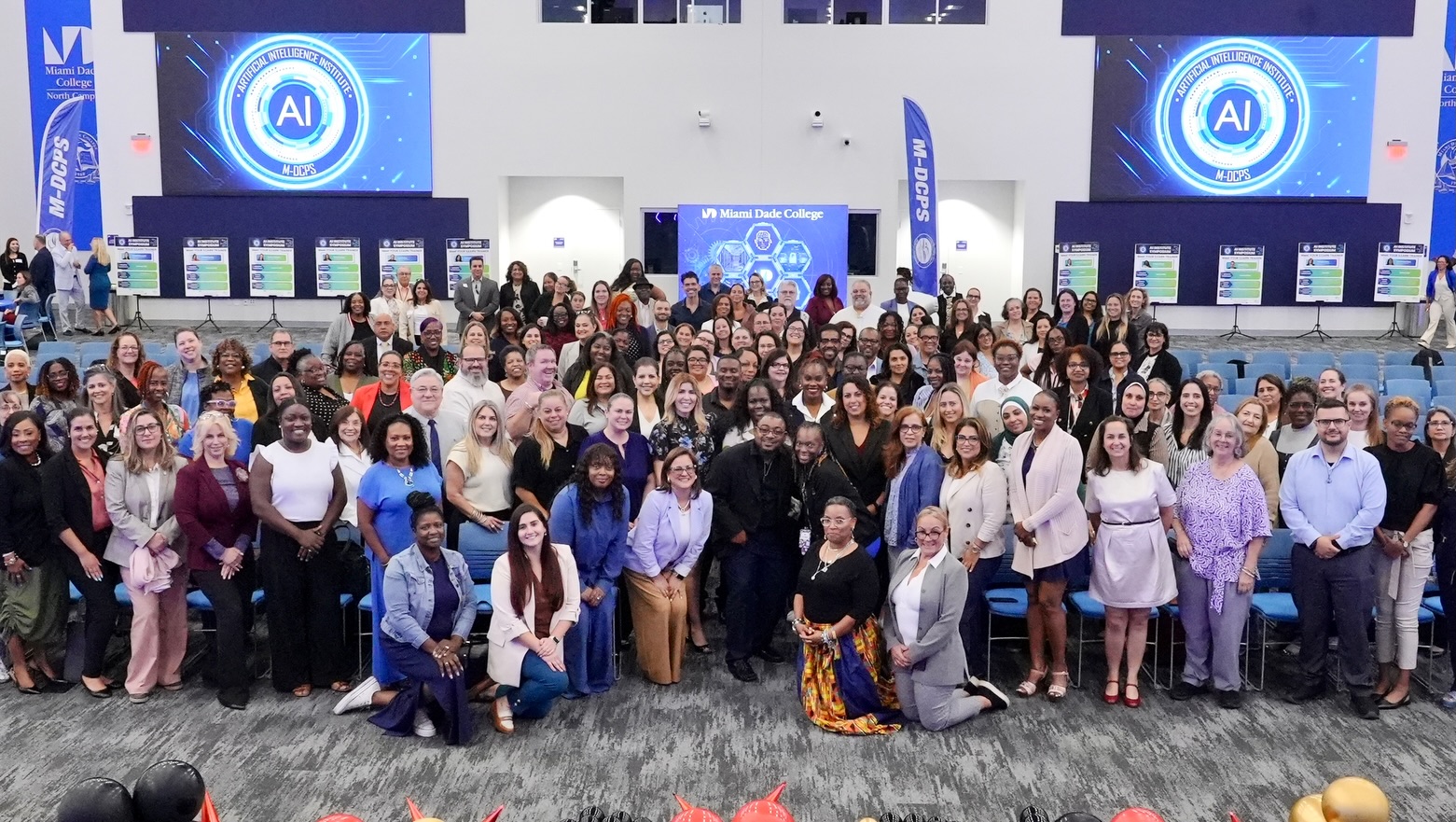
It was a Saturday in the most tired stretch of the school year. Teachers and administrators from Miami-Dade County Public Schools gave up a rare day off to be there. No one made them come. They came to share what is working, to learn from one another, and to figure out AI in the classroom together.
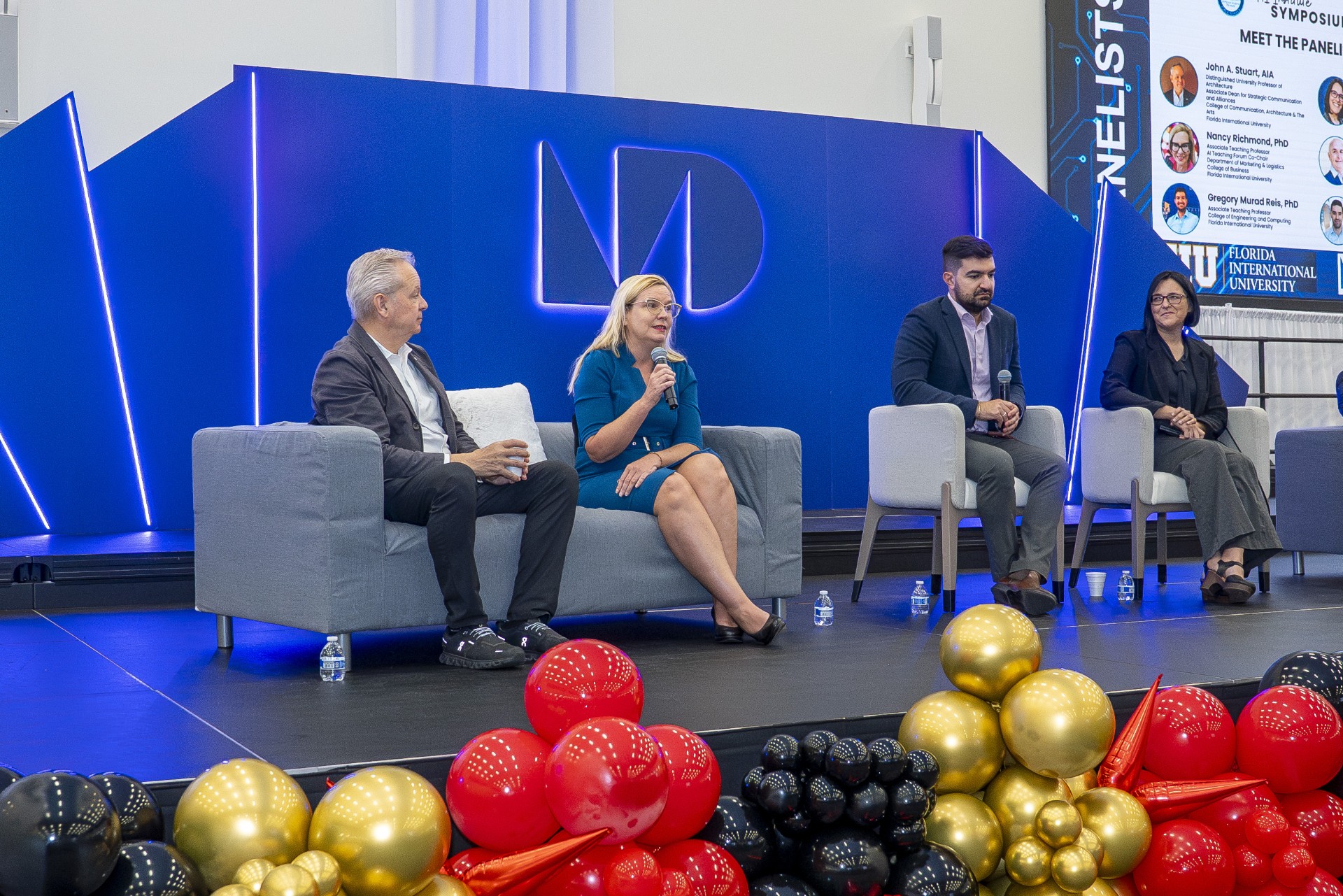
It was the third annual M-DCPS AI Institute Symposium at Miami Dade College North. It was also a celebration, the capstone for educators who spent a full term learning to bring AI into their schools with care.
Look closely at what that room represented. A public school district, a public college, and a public university chose to sit down together and ask the same question out loud. Three institutions that usually meet kids at different stages, in one place, on their own time. That is rare. That is the Power of We, and it is how real change actually happens. Not one hero at a time, but a community of practice figuring it out side by side.
Underneath all of this runs a deeper fear. That AI is making us more alone, not less. That is the danger. But that room was the answer. AI did not pull those educators apart. It gave them a reason to come together, across every grade level, to learn side by side. Used well, AI can do the same for our students. It can be a reason to gather, to compare, to talk a hard problem through out loud, instead of one more screen to disappear into. The tool does not decide whether we connect or retreat. We do.
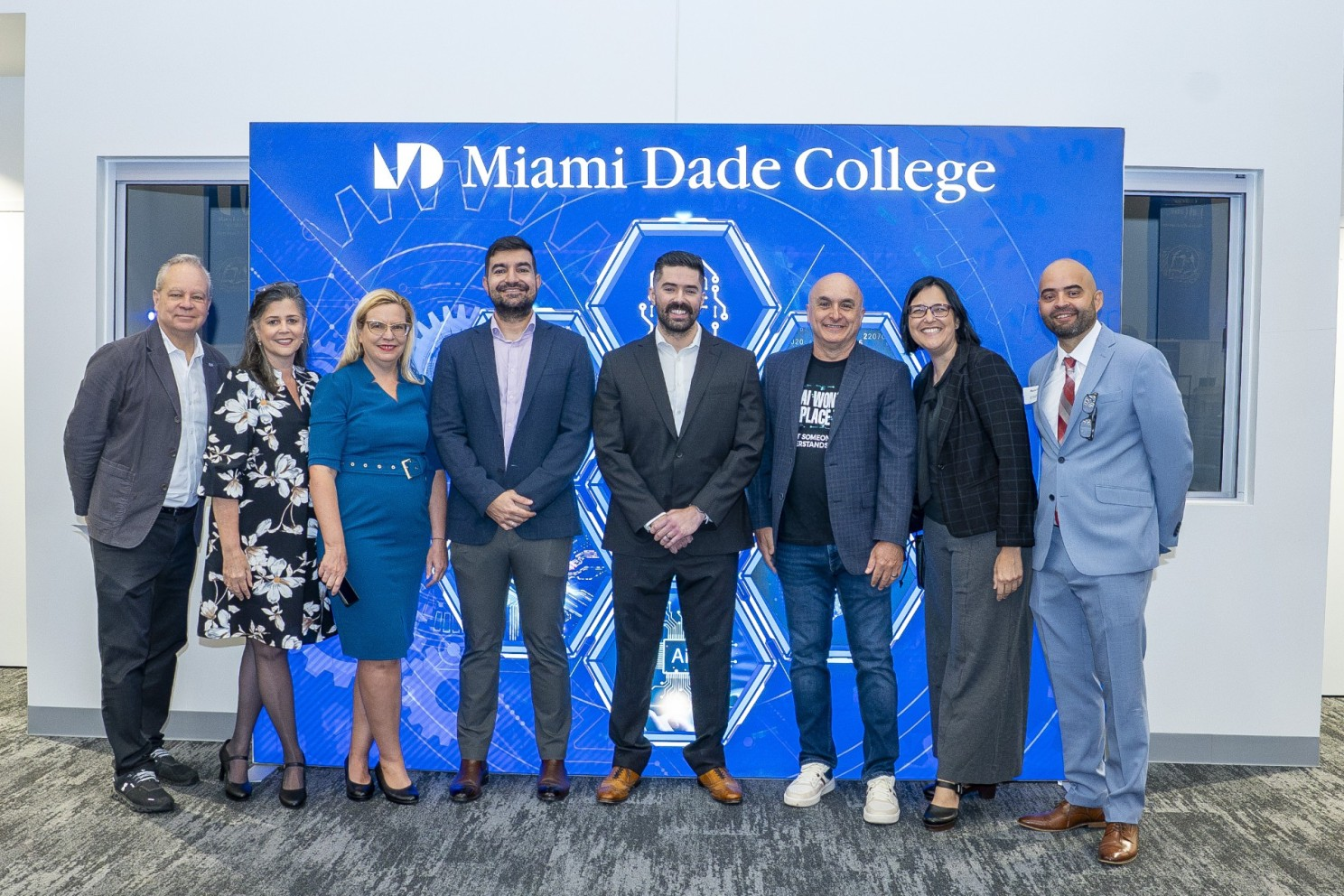
I was honored to be on a panel with Belkis L. Cabrera, Ph.D. and Javier Perez-Hickman from Miami Dade College, along with my FIU colleagues Edward Duran, Gregory Murad Reis, PhD and John Stuart. Thank you Marco Diez for moderating the panel discussion.
What Using AI Well Actually Looks Like
Used with intention, AI does not replace the teacher. It gives the teacher back the hours and the reach the job keeps taking away. Here is what I keep coming back to.
Give teachers their time back. Used well, AI drafts the lesson plan, writes a first pass of the parent email, and generates a study guide in seconds. The teacher edits, personalizes, and decides what the students actually need. Teachers who use AI well report saving five to six hours a week. That is one afternoon each week to sit with a kid who is struggling.
Reach the students who need it most. AI can rewrite the same lesson at multiple reading levels, shape materials to an IEP in minutes instead of hours, and translate a lesson into a language a child can actually understand. This is not just impressive technology. It is technology finally letting a teacher reach a student she was always trying to reach.
Make AI a thinking partner, not an answer engine. The goal is not faster answers. It is better questions. AI will answer the first thing a student asks. The skill we have to teach is the second question, and the third. The muscle of asking good questions can be strengthened in this new digital world, not lost in it. A student who asks once gets a shallow answer. A student who keeps probing, correcting, and debating gets to understanding.
Teach responsible, ethical use. Real AI literacy includes privacy, bias, and academic integrity, taught out loud rather than left for students to guess at. Educators are the ones answering these questions in real time.
Keep purpose at the center. When a student lets the machine do the work, the deepest loss is not honesty. It is purpose, the sense that the work is theirs and that it matters. So we connect the learning to the student. We ask not only what they learned, but why it matters to them and who they want to become. AI can produce the essay. It cannot give a student a reason to care about it. AI can hand a student an answer. It can never hand them a reason.
Why Innovation Is Not Optional
Here is the part people miss. Innovation is not about adopting every new tool the moment it appears. It is about staying curious in a changing world. It is the willingness to be a beginner again, even after twenty years, and to let your students watch you learn. The tool will change again next year. What lasts is the habit of curiosity.
This is also the real answer to what employers want. The tool a student masters today will be old news by the time they graduate. So employers are not really asking who knows the current tool. They are asking who can learn the next one, and the next. They are asking for someone who never stops learning.
The Real Curriculum Is Human
AI is here to stay. Learning to use it well is becoming a baseline skill, the way searching and typing once were. But the more AI does, the more the human skills become the actual curriculum. Not despite AI. Because of it.
Listening, empathy, collaboration, conflict repair, reading a room, asking the question no one else thought to ask. Those do not matter less as the technology improves. They matter more. A student who can only prompt well is replaceable by a slightly better model. A student who can lead a hard conversation, hold complexity, and build trust is not.
AI fluency gets a graduate in the door. Human skills make them impossible to replace once they are inside.
Why I Left Grateful
Among students, AI use is already nearly universal. The only real choice left is whether an educator who understands AI is in the room while they learn to use it well, or whether they figure it out alone.
I left that auditorium grateful. I had spent a Saturday with courageous educators who refuse to give up. They are choosing, together, to prepare their students for a future with AI. Because the new school year is coming, and the kids will be there.
The same question runs through everything I do. In my classroom, in my books, even in the little stories my family tells for the youngest kids about staying curious and kind. How do we stay human in a digital world?
I would love to hear from you. How is your school, campus, or educational institution bridging the gap between AI tools and human connection in the classroom?
Dr. Nancy Richmond is a professor at Florida International University's College of Business, where she co-chairs the AI Teaching Forum and helps educators bring AI into their classrooms without losing the human at the center.
